
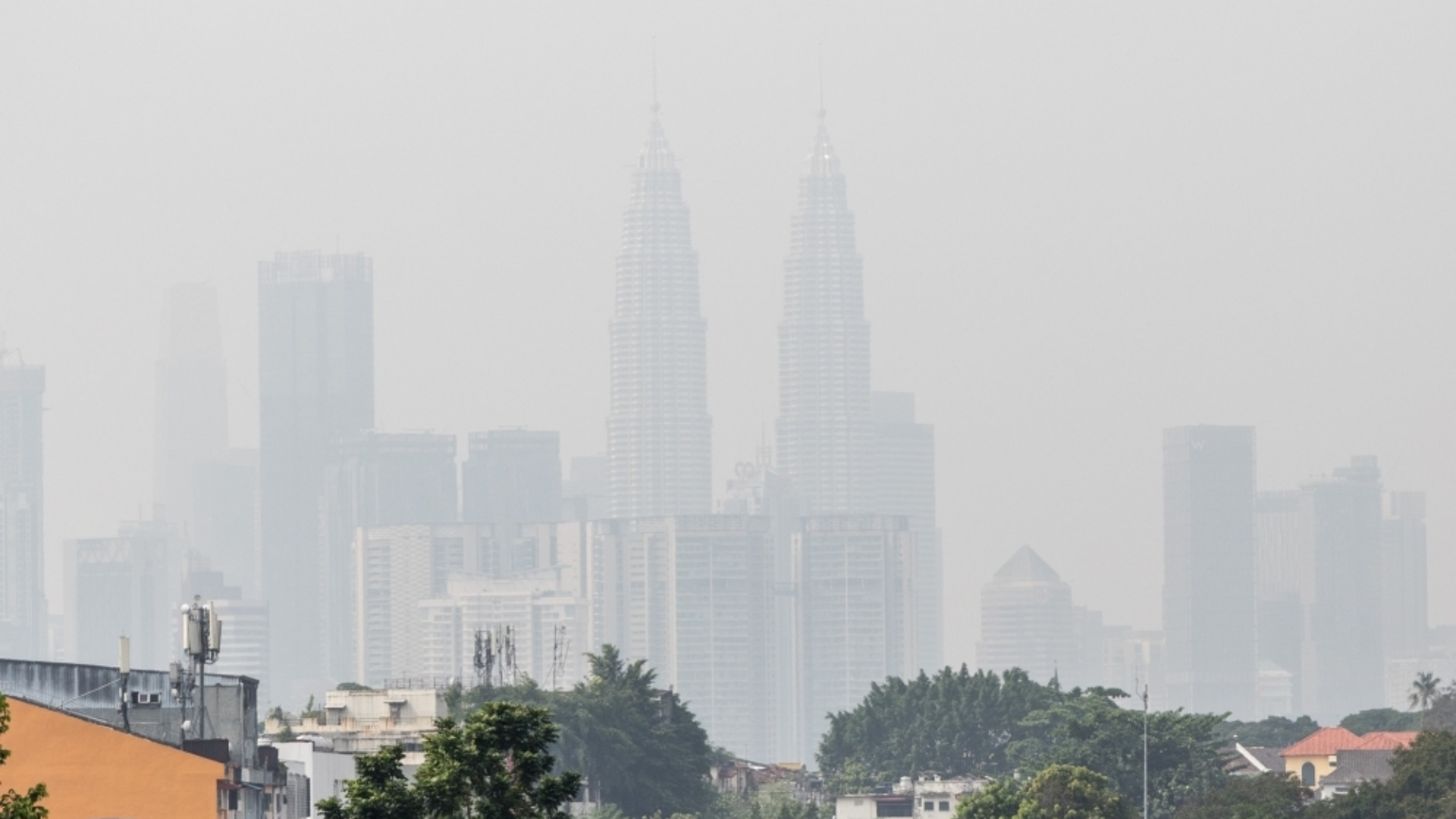
Transboundary haze pollution has long been a recurring environmental concern in Southeast Asia, particularly affecting Malaysia, Singapore, Brunei and other neighbouring countries. Forest and peatland fires originating in Indonesia have repeatedly contributed to deteriorating air quality across national borders. The consequences extend beyond environmental degradation, affecting public health, educational institutions, commercial activities and the daily lives of millions.
Despite the recurring nature of this problem, an important legal question remains: Can Malaysia take legal action against Indonesia for transboundary haze pollution?
If fires originate in Indonesia but their harmful consequences are experienced in Malaysia, can the Indonesian government be held legally responsible? Alternatively, can Malaysian individuals or businesses pursue claims against companies responsible for the fires?
These questions involve several areas of law, including international environmental law, the binding effect of ASEAN treaties, cross-border tortious liability and the jurisdiction of domestic and international courts. The differences between Malaysia’s common law system and Indonesia’s civil law system further complicate the legal landscape, particularly where proceedings involve private companies operating across national borders.
Singapore has attempted to address similar challenges through its Transboundary Haze Pollution Act 2014, which expressly provides for extraterritorial liability in specified circumstances. Malaysia, however, has yet to enact equivalent legislation.
With renewed discussions in 2026 concerning a dedicated Malaysian transboundary haze law, the question is no longer simply whether Malaysia possesses legal rights against cross-border pollution, but whether its existing legal framework provides effective mechanisms to exercise those rights.
Malaysia’s Legal Position: Can Indonesia Be Held Responsible?
In principle, Malaysia may pursue a claim against Indonesia under public international law if it can establish that Indonesia has breached an applicable international obligation concerning transboundary environmental harm.
International environmental law recognises that states possess sovereignty over their territories and natural resources. However, such sovereignty is not absolute. Principle 21 of the Stockholm Declaration 1972 and Principle 2 of the Rio Declaration on Environment and Development 1992 reflect the principle that states have a responsibility to ensure that activities within their jurisdiction or control do not cause environmental damage to other states.
In Pulp Mills on the River Uruguay (Argentina v Uruguay) (2010), the International Court of Justice (ICJ) recognised the importance of due diligence and environmental impact assessment where activities present a risk of significant transboundary harm.
Nevertheless, Indonesia does not automatically become internationally liable whenever smoke originating from its territory reaches Malaysia. To establish international responsibility, Malaysia would need to demonstrate the existence of a relevant international obligation, a breach attributable to Indonesia and the necessary connection between that breach and the alleged harm.
Where fires are caused by private plantation companies or individuals, their conduct is not automatically attributable to the Indonesian government. A separate question may arise as to whether Indonesia failed to exercise the due diligence required to prevent, regulate or respond to activities presenting a foreseeable risk of significant transboundary harm. The distinction is important because international law generally requires states to exercise appropriate care and preventive measures, rather than guaranteeing that environmental harm will never occur.
Who Can Initiate Proceedings Against Indonesia?
If Malaysia seeks to establish Indonesia’s responsibility as a sovereign state, proceedings would ordinarily need to be initiated by the Malaysian government. Under Article 34(1) of the Statute of the International Court of Justice, only states may be parties in contentious proceedings before the Court. Malaysian individuals who suffer respiratory illness, property damage or economic losses due to haze cannot personally commence proceedings against Indonesia before the International Court of Justice (ICJ).
Furthermore, Malaysia cannot automatically compel Indonesia to appear before the ICJ. Article 36 of the ICJ Statute requires a recognised jurisdictional basis, such as a special agreement between the states, an applicable treaty provision conferring jurisdiction or relevant declarations accepting compulsory jurisdiction. Malaysia and Indonesia previously submitted their territorial dispute concerning Pulau Ligitan and Pulau Sipadan to the ICJ through a special agreement. However, consent to adjudicate that dispute does not automatically extend to environmental disputes.
Accordingly, Malaysia would need to identify a valid jurisdictional basis before commencing international judicial proceedings against Indonesia.
The ASEAN Agreement on Transboundary Haze Pollution: A Binding Treaty Without Compulsory Adjudication
The most directly relevant international treaty is the ASEAN Agreement on Transboundary Haze Pollution (AATHP), signed in Kuala Lumpur on 10 June 2002 and which entered into force on 25 November 2003.
Malaysia ratified the agreement in December 2002, while Indonesia completed its domestic ratification process in 2014 and deposited its instrument in January 2015. Both countries are therefore bound by the agreement.
The AATHP establishes a regional framework for preventing, monitoring and mitigating transboundary haze pollution resulting from land and forest fires. Article 3 sets out principles concerning the prevention of transboundary environmental harm, cooperation and precaution. Article 4 requires parties to cooperate in developing and implementing preventive and monitoring measures, while Article 9 addresses measures to prevent and control activities relating to land and forest fires.
Of particular significance is Article 4(2), which requires a state from whose territory transboundary haze originates to respond promptly to requests for relevant information or consultations from affected states. This provision offers Malaysia a practical legal mechanism to formally request information from Indonesia concerning suspected sources of haze, including relevant land-concession records, operator identities, fire-control measures and enforcement outcomes.
However, the agreement has an important limitation. Under Article 27, disputes concerning the interpretation, application or compliance with the AATHP are to be settled amicably through consultation or negotiation. The treaty does not establish compulsory ICJ jurisdiction or an automatic right to financial compensation.
Consequently, although Malaysia may invoke the agreement to raise concerns regarding Indonesia’s compliance, the treaty does not itself permit Malaysia to compel Indonesia to defend a compensation claim before the ICJ. Hence, the central challenge is not the absence of a binding regional agreement, but the limited mechanisms available to enforce its obligations.
Malaysia’s Domestic Legal Framework: The Limits of the Environmental Quality Act 1974
Malaysia’s principal legislation governing environmental pollution is the Environmental Quality Act 1974 (EQA 1974). The Act provides an important statutory framework for regulating pollution and undertaking environmental enforcement within Malaysia. Section 29A prohibits open burning, subject to applicable statutory provisions and exceptions. Legislative amendments brought into force in 2024 also strengthened penalties for various environmental offences.
Nevertheless, the EQA 1974 does not provide a comprehensive framework specifically designed to impose liability on foreign companies for haze originating from activities conducted entirely outside Malaysia. For example, Malaysian authorities may take enforcement action against unlawful open burning occurring within Malaysia. However, the same statutory powers cannot simply be exercised against peatland fires occurring in Indonesia merely because smoke reaches Malaysian territory.
The difficulty becomes more significant where overseas agricultural operations are financed, owned or controlled by companies with Malaysian connections. Although a Malaysian parent company may have an economic interest in an Indonesian subsidiary, that relationship does not automatically establish legal liability under Malaysian law. A claimant or enforcement authority would need to identify a relevant statutory obligation, an independently actionable wrongful act or another recognised basis for holding the Malaysian entity responsible.
This reveals a significant limitation in Malaysia’s existing legal framework where domestic environmental enforcement powers do not necessarily extend to the overseas activities responsible for pollution experienced within Malaysia.
Singapore’s Approach: Can Extraterritorial Legislation Provide A Solution?
Singapore offers an important comparative example through its Transboundary Haze Pollution Act 2014 (THPA). Section 4 expressly extends the legislation to conduct occurring outside Singapore that causes or contributes to haze pollution within Singapore. Section 5 establishes criminal offences concerning specified haze-related conduct, while Section 6 provides for civil liability where qualifying injury, property damage or economic loss is suffered in Singapore. Section 6(4) is particularly significant because it permits a qualifying statutory cause of action to be pursued in Singapore even where the relevant conduct is not actionable under the law of the foreign jurisdiction in which it occurred. The Act also contains rebuttable evidentiary presumptions under Section 8, which may assist in establishing connections between fires, land ownership or occupation, meteorological conditions and haze pollution.
Singapore’s National Environment Agency has exercised statutory powers by issuing preventive measure notices to companies associated with fires in Indonesia. However, issuing such notices is not equivalent to obtaining a court judgment or establishing criminal liability.
For Malaysia, the lesson is not that Singapore possesses an unrestricted right to prosecute Indonesian companies while Malaysia is legally prohibited from doing so. Rather, Singapore has enacted a specific statutory framework addressing transboundary haze liability, whereas Malaysia continues to rely principally on existing environmental legislation.
Malaysia’s Renewed Consideration of Transboundary Haze Legislation
Malaysia previously considered introducing a dedicated Transboundary Haze Pollution Bill but decided in 2023 not to proceed with the proposal. However, the issue has returned to the national legislative agenda.
On 25 September 2026, it was reported that the Ministry of Natural Resources and Environmental Sustainability was examining mechanisms for drafting specific legislation addressing transboundary haze pollution, including Singapore’s legislative approach. The ministry also confirmed that a special committee involving relevant ministries and agencies had been established to study measures to strengthen Malaysia’s response.
This development represents an important reconsideration of Malaysia’s domestic legal framework, although the establishment of a committee does not itself mean that a new law has been enacted.
SUHAKAM’s Position: Environmental Harm As A Human Right Concern
The Human Rights Commission of Malaysia (SUHAKAM) has also called for stronger accountability concerning transboundary haze pollution. In its media statement dated 13 October 2026, SUHAKAM emphasised that recurring haze is not merely an environmental inconvenience, but a serious public health and human rights concern affecting the rights to life, health, education, information, safe working conditions and a clean, healthy and sustainable environment.
SUHAKAM supported the polluter pays principle, under which those legally responsible for pollution should bear the associated costs rather than transferring the burden to affected communities. However, the principle does not dispense with the need to establish responsibility through reliable evidence and fair legal procedures.
SUHAKAM urged Malaysia to develop a credible, evidence-based legal strategy by tracing verified fires to land ownership or control, company operations and fire-prevention measures. It also recommended establishing a dedicated multi-agency investigative team comprising environmental scientists, corporate investigators and government lawyers.
Significantly, SUHAKAM called on Malaysia to make full use of Article 4(2) of the AATHP by formally requesting relevant information and consultations from affected neighbouring states. SUHAKAM further advocated dedicated transboundary haze legislation containing clear definitions, effective investigative powers, appropriate civil remedies and criminal penalties, together with safeguards for due process and fair hearings.
These recommendations highlight the importance of moving beyond general diplomatic concern towards systematic investigation, legal accountability and accessible remedies.
Strengthening ASEAN’s Response: From Treaty Commitments to Practical Enforcement
Transboundary haze is inherently regional. Even comprehensive domestic legislation cannot fully address pollution that crosses national boundaries. ASEAN’s existing legal framework therefore remains central to any long-term solution.
In October 2026, Malaysia announced its intention to raise transboundary haze at an ASEAN foreign ministers’ meeting ahead of the bloc’s forthcoming summit in Manila. The Malaysian Foreign Minister observed that haze was not included within existing ASEAN mechanisms addressing natural disasters, highlighting the need for more effective regional arrangements.
Nevertheless, this does not mean that ASEAN lacks a legal framework for haze pollution. The AATHP already addresses the issue directly, although its implementation and enforcement mechanisms remain limited.
In a commentary published on 20 October 2026, former ASEAN Secretary-General Ong Keng Yong and Professor Jemilah Mahmood argued that the region should focus on strengthening implementation of the existing agreement rather than negotiating another treaty. Their proposals included formal information requests under Article 4(2) of the AATHP, stronger regional coordination, reciprocal evidence-sharing arrangements, common health-based monitoring standards and improved financing mechanisms. They also suggested exploring longer-term arrangements involving concession-holder liability, compulsory fire insurance and contributions from commercial operators. These are policy proposals rather than obligations already imposed by the existing treaty. Nevertheless, they illustrate how the AATHP could potentially be strengthened through a combination of legal, administrative and institutional measures.
The ASEAN Agreement on Disaster Management and Emergency Response may also offer useful institutional lessons for regional cooperation, although its application to haze would require consideration of the agreement’s scope and relevant ASEAN arrangements. Ultimately, a regional response must address not only fire suppression, but also prevention, corporate accountability, scientific evidence, public health protection and enforcement.
The Way Forward for Malaysia
There is unlikely to be a single legal solution capable of resolving transboundary haze pollution. A more effective response would require coordinated measures at domestic, regional and international levels.
In the immediate term, Malaysia can make fuller use of the AATHP by submitting formal requests for information and consultations, while strengthening scientific monitoring and evidence collection.
At the domestic level, Malaysia’s renewed examination of dedicated transboundary haze legislation presents an opportunity to consider clearer corporate liability provisions, appropriate civil remedies, investigative powers and evidentiary mechanisms. Any such legislation should also examine the role of Malaysian companies involved in overseas plantation operations, without presuming liability solely from ownership, investment or corporate association.
At the regional level, ASEAN could strengthen reciprocal evidence-sharing, transparency of concession information, coordinated investigations and mechanisms for reviewing compliance with existing commitments. In the longer term, consideration could be given to more effective compensation and risk-financing arrangements based on the polluter pays principle, subject to agreement among the relevant states.
Importantly, these measures should operate alongside, rather than replace, existing diplomatic engagement and cooperation with Indonesia. Indonesia itself experiences substantial environmental, economic and public health consequences from forest and peatland fires. Effective solutions must therefore recognise the shared regional interest in prevention and accountability.
Conclusion
Transboundary haze pollution raises fundamental questions about national sovereignty, environmental responsibility and access to justice. Malaysia and Indonesia are bound by the ASEAN Agreement on Transboundary Haze Pollution, which establishes obligations concerning prevention, cooperation and information-sharing. However, the absence of compulsory adjudication under the agreement, together with the jurisdictional and evidentiary difficulties of cross-border litigation, limits the practical availability of judicial remedies.
At the domestic level, Malaysia’s Environmental Quality Act 1974 remains an important environmental enforcement instrument, but it does not provide the same comprehensive extraterritorial haze-liability framework as Singapore’s Transboundary Haze Pollution Act 2014. The renewed consideration of Malaysian legislation in September 2026, together with SUHAKAM’s recommendations and proposals for stronger ASEAN implementation, presents an opportunity to address these limitations.
Therefore, the question is no longer simply whether Malaysia can sue Indonesia. It is whether Malaysia can develop a coherent legal strategy combining international obligations, domestic accountability, scientific evidence and regional cooperation. The challenge is to transform existing legal rights and regional commitments into effective mechanisms capable of preventing harm, identifying responsible parties and securing meaningful remedies.
Environmental pollution may cross national borders, but accountability should not disappear at the border.
This Legal Article was written by Muhammad Shafiq Bin Shamsudin
(Senior Legal Associate) with the assistance of Wan Mohamad Arsham Faris Bin Wan Mohd Razani (Litigation Associate) and Chia Ying Jia (Litigation Associate)
Disclaimer: This posting is for informational purposes and does not constitute a legal advice.